
— Buyer Guide
Electric and Hybrid SUVs in Kenya: Are They Worth It in 2026?
Kenya offers a massive 10% excise duty rate for electric vehicles — compared to 25–35% for petrol and diesel. But is the charging infrastructure ready? Here is the honest, data-driven analysis.
The global automotive industry is undergoing its most dramatic transformation since the invention of the internal combustion engine. Electric vehicles (EVs) and hybrid electric vehicles (HEVs) are no longer futuristic concepts — they are arriving at the Port of Mombasa in growing numbers every month. The Kenyan government has recognized this shift and introduced one of the most aggressive EV tax incentives in Africa: a reduced excise duty rate of just 10% for fully electric vehicles, compared to 25–35% for conventional petrol and diesel engines. On paper, this makes importing an electric SUV to Kenya dramatically cheaper than an equivalent combustion vehicle. But the real-world picture is more nuanced. Charging infrastructure, battery degradation in tropical heat, resale value uncertainty, and the practical realities of driving an EV on Kenyan roads all factor into the equation. This guide provides the definitive, honest analysis to help you decide whether an electric or hybrid SUV is the right choice for your Kenyan lifestyle.
1. The KRA Tax Incentive: How Much Do You Actually Save?
The Kenyan government's EV incentive is structured around the excise duty component of the import tax formula. Under the current CFR regime (effective 1st July 2026), the excise duty tiers are:
- ◆Fully Electric Vehicles (BEV): 10% excise duty on CFR + Import Duty.
- ◆Hybrid Electric Vehicles (HEV/PHEV): 25% excise duty (same as conventional petrol under 2,500cc). Some PHEVs with larger battery packs may qualify for reduced rates — verify with KRA before importing.
- ◆Conventional Petrol (1,501–3,000cc): 25–30% excise duty.
- ◆Conventional Petrol (above 3,000cc): 35% excise duty.
- ◆Conventional Diesel (1,501–3,000cc): 25% excise duty.
- ◆Conventional Diesel (above 3,000cc): 35% excise duty.
Real-World Savings Example: BMW iX xDrive50 vs BMW X5 xDrive40i
Let us compare two similarly sized, similarly priced BMW SUVs — one fully electric, one conventional petrol — to illustrate the actual tax savings:
- ◆BMW iX xDrive50 (Electric): CFR $55,000 | Import Duty 25%: KES 1,787,500 | Excise 10%: KES 893,750 | VAT 16%: KES 1,572,000 | IDF + RDL: KES 321,750 | Local Insurance: KES 107,250 | Est. Total Landed: ~KES 12,500,000
- ◆BMW X5 xDrive40i (Petrol 3.0L): CFR $55,000 | Import Duty 25%: KES 1,787,500 | Excise 35%: KES 3,128,125 | VAT 16%: KES 1,934,000 | IDF + RDL: KES 321,750 | Local Insurance: KES 107,250 | Est. Total Landed: ~KES 15,100,000
- ◆Total Tax Savings with EV: Approximately KES 2,600,000
The Bottom Line
On a high-value luxury SUV, the 10% EV excise rate saves you KES 2–3 million compared to an equivalent 35% excise combustion vehicle. On a mid-range SUV like the Toyota RAV4, the savings are smaller (KES 800,000–1.2 million) because the base vehicle cost is lower.
2. The Best Electric and Hybrid SUVs to Import to Kenya in 2026
Based on availability in Japanese and Dubai export markets, compatibility with Kenyan charging infrastructure, and real-world suitability for Nairobi roads, here are the top models we recommend:
Fully Electric (BEV)
- ◆Tesla Model Y (Long Range AWD): The global best-selling EV. 500+ km WLTP range, Supercharger-compatible, excellent software. Available from Dubai and UK markets. Est. landed: KES 8.5M–10.5M. Note: Tesla does not have an official service center in Kenya, so body repairs and battery servicing require specialized independent workshops.
- ◆BMW iX xDrive50: The luxury EV benchmark. 600+ km WLTP range, stunning interior, air suspension, and BMW's established dealer network in Nairobi (via Inchcape). Est. landed: KES 12M–15M.
- ◆Mercedes-Benz EQE SUV 350+: Mercedes' electric answer to the GLE. 550 km WLTP range, MBUX Hyperscreen, and DT Dobie service support in Nairobi. Est. landed: KES 13M–16M.
- ◆Toyota bZ4X: Toyota's first dedicated EV. 450 km WLTP range, familiar Toyota reliability, and CFAO Motors Kenya service support. Est. landed: KES 7M–9M. The most practical EV for buyers who want Toyota's parts network.
- ◆Hyundai Ioniq 5: Retro-futuristic design, 480 km WLTP range, ultra-fast 800V charging architecture. Est. landed: KES 7.5M–9.5M.
Hybrid (HEV) and Plug-in Hybrid (PHEV)
- ◆Toyota RAV4 Hybrid (2.5L HEV): The undisputed hybrid champion for Kenya. No charging required — the battery charges itself through regenerative braking. Fuel consumption of 4.5–5.5 L/100km (compared to 8–10 L/100km for the petrol RAV4). Est. landed: KES 6.5M–8M. This is the safest hybrid choice for buyers who travel upcountry frequently.
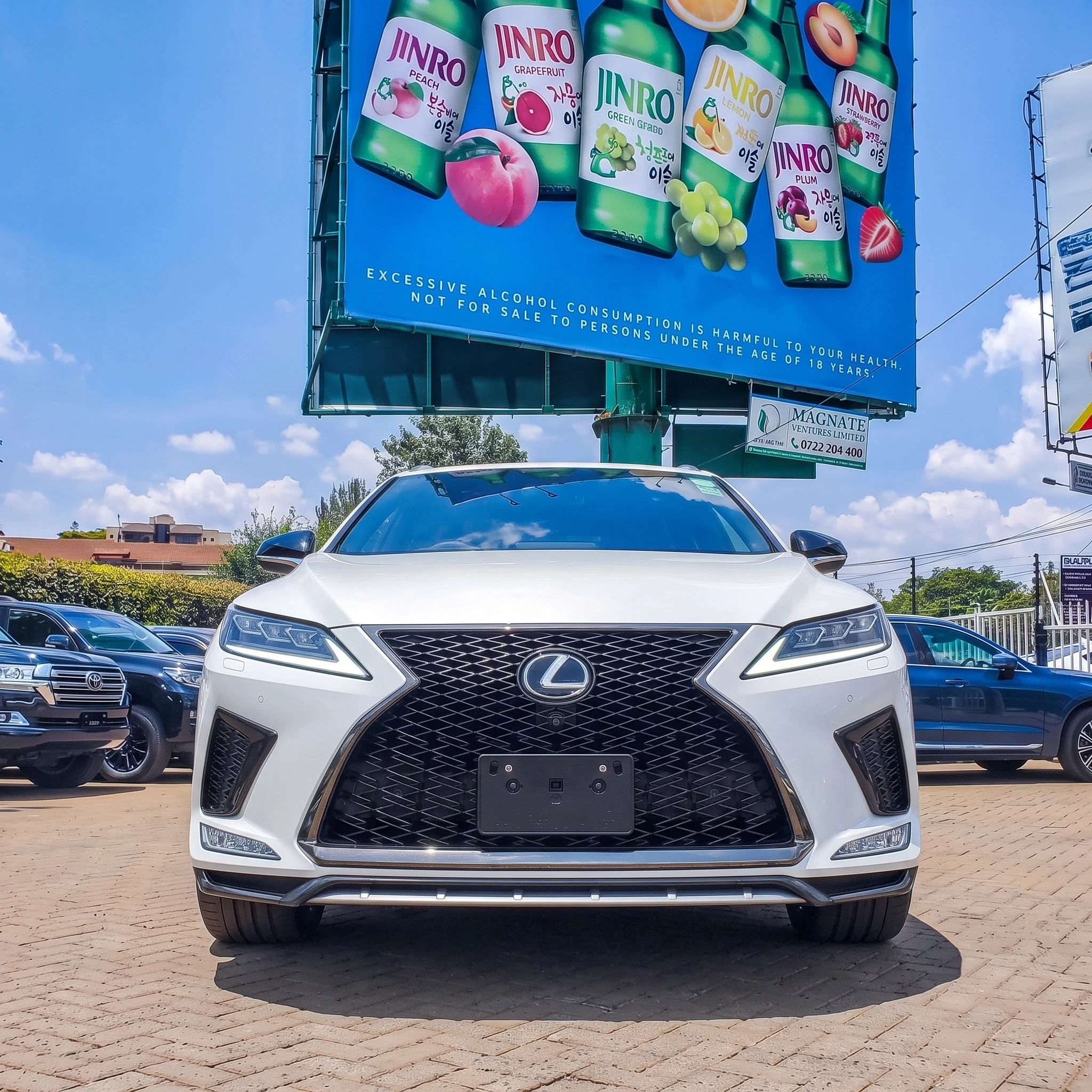
- ◆Lexus RX500h (2.4L Turbo Hybrid): Luxury hybrid with 370 hp, all-wheel drive, and a cabin that rivals the best European SUVs. Est. landed: KES 11M–14M.
- ◆Toyota Land Cruiser LC300 (3.5L V6 Twin-Turbo Hybrid): The newest addition to the Land Cruiser lineup. Combines the legendary LC300 platform with a hybrid powertrain for improved fuel economy (9–11 km/L vs 7–8 km/L for the petrol V6). Est. landed: KES 23M–28M.
- ◆Porsche Cayenne E-Hybrid (PHEV): 40–50 km of pure electric range for Nairobi city driving, with a 3.0L V6 petrol engine for highway and upcountry trips. The best of both worlds. Est. landed: KES 16M–20M.
- ◆Range Rover Sport P460e (PHEV): 100+ km electric range (WLTP), air suspension, and the full Range Rover luxury experience. Est. landed: KES 18M–24M.
3. Charging Infrastructure in Kenya: The Honest Reality
This is the most critical factor in the EV ownership equation, and it is where the gap between marketing promises and ground reality is widest.
Nairobi: Adequate and Growing
As of September 2026, Nairobi has approximately 35–50 public EV charging stations, concentrated in the following areas:
- ◆Westlands and Lavington: Multiple fast-charging stations at shopping malls (Sarit Centre, The Junction, Lavington Mall).
- ◆CBD and Upper Hill: KPLC and private operator charging points at office complexes.
- ◆Karen and Runda: A growing number of residential charging installations and a few public stations.
- ◆JKIA and Nairobi Expressway: Charging stations at the airport and along the expressway corridor.
For daily city driving within Nairobi, a fully electric SUV with a 400+ km range can comfortably go 5–7 days between charges. Most EV owners install a home wallbox charger (cost: KES 150,000–300,000 including installation) in their garage, which provides a full overnight charge from a standard KPLC single-phase supply.
Upcountry and Long-Distance: The Critical Gap
This is where the EV proposition becomes challenging. Outside Nairobi, public charging infrastructure is extremely limited:
- ◆Mombasa Road: 2–3 charging stations along the Nairobi-Mombasa highway (at Athi River, Voi, and Mariakani). Sufficient for a one-way trip with strategic planning.
- ◆Nakuru and Naivasha: 1–2 charging points at major fuel stations.
- ◆Nanyuki, Meru, and Mount Kenya Region: Virtually no public charging infrastructure.
- ◆Kisumu and Western Kenya: 1–2 charging points in Kisumu city.
- ◆Turkana, Marsabit, Garissa, and Northern Kenya: Zero charging infrastructure.
The Roskyways Recommendation
If your driving is 90% within Nairobi and you have a home charger, a fully electric SUV is an excellent choice. If you regularly drive upcountry — to Nanyuki, the Maasai Mara, Lamu, or Turkana — a hybrid (HEV or PHEV) is the smarter option. The hybrid gives you electric efficiency in the city and petrol range for long distances without any charging anxiety.
4. Running Costs: EV vs Petrol vs Diesel in Kenya
The operational cost advantage of electric vehicles in Kenya is significant, primarily because KPLC electricity tariffs are substantially cheaper than EPRA-regulated fuel prices.
Cost Per Kilometer Comparison (Nairobi City Driving)
- ◆Electric SUV (e.g., Tesla Model Y): Consumes approximately 18 kWh/100km. At KPLC domestic tariff of KES 25/kWh, the cost is KES 4.5 per kilometer.
- ◆Petrol SUV (e.g., Toyota RAV4 2.0L): Consumes approximately 9 L/100km. At EPRA Super Petrol price of KES 195/L, the cost is KES 17.6 per kilometer.
- ◆Diesel SUV (e.g., Toyota Prado 2.8L): Consumes approximately 8 L/100km. At EPRA Diesel price of KES 175/L, the cost is KES 14.0 per kilometer.
- ◆Hybrid SUV (e.g., RAV4 Hybrid): Consumes approximately 5 L/100km. At KES 195/L, the cost is KES 9.8 per kilometer.
The EV is nearly 4x cheaper per kilometer than a petrol SUV. Over a typical 15,000 km annual driving distance, the annual fuel savings are:
- ◆EV vs Petrol: KES 196,500 saved annually.
- ◆EV vs Diesel: KES 142,500 saved annually.
- ◆Hybrid vs Petrol: KES 117,000 saved annually.
5. Maintenance Costs: The EV Advantage
Electric vehicles have dramatically fewer moving parts than combustion engines, which translates to significantly lower maintenance costs:
- ◆No Engine Oil Changes: EVs do not have internal combustion engines, eliminating the KES 15,000–45,000 semi-annual oil change.
- ◆No Transmission Fluid: Most EVs use a single-speed reduction gear that requires no fluid changes.
- ◆Brake Pad Longevity: Regenerative braking handles 70–80% of deceleration, meaning physical brake pads last 100,000+ km compared to 40,000–60,000 km on combustion vehicles.
- ◆No Exhaust System: No catalytic converters, DPF filters, or exhaust pipes to replace.
- ◆No Cooling System Complexity: EVs use simpler thermal management systems with fewer hoses, pumps, and plastic fittings that degrade over time.
The estimated annual maintenance cost for an electric SUV in Kenya is KES 40,000–80,000 (tires, cabin filters, brake fluid, wiper blades, and software updates). A comparable petrol SUV costs KES 120,000–250,000 annually in routine maintenance.
6. The Battery Question: Degradation, Warranty, and Replacement
The lithium-ion battery pack is the most expensive component in an electric vehicle, and its long-term health is the primary concern for Kenyan buyers.
Battery Degradation in Tropical Climates
Lithium-ion batteries degrade faster in hot environments. Nairobi's average temperature of 20–28°C is actually within the optimal range for battery health (15–30°C). However, driving in extreme heat (Mombasa at 35°C, Turkana at 40°C+) or frequent fast-charging in direct sunlight can accelerate degradation. Modern EV battery management systems (BMS) actively cool the battery pack during charging and driving, mitigating most heat-related damage.
- ◆Expected Battery Degradation: 10–15% capacity loss over 8 years / 160,000 km under normal Kenyan conditions.
- ◆Manufacturer Warranty: Most EV manufacturers provide an 8-year / 160,000 km battery warranty guaranteeing at least 70% of original capacity.
- ◆Replacement Cost: If the battery fails outside warranty, replacement costs range from KES 1.5M–3.5M depending on the vehicle. This is the single largest financial risk of EV ownership.
7. Resale Value: The Unknown Variable
This is the most honest section of this guide, and it is where we must temper the EV enthusiasm with market reality.
The Kenyan used car market has not yet established reliable resale value patterns for electric vehicles. While a Toyota Land Cruiser LC300 will predictably retain 80–85% of its value after 3 years, the resale trajectory of a Tesla Model Y or BMW iX in Kenya is uncertain. Factors that could depress EV resale values include:
- ◆Rapid technology obsolescence: A 2024 EV with 400 km range may seem outdated by 2028 when new models offer 700 km range.
- ◆Battery health anxiety: Second-hand buyers may be reluctant to purchase an EV with a degraded battery and no remaining warranty.
- ◆Limited buyer pool: The number of Kenyan buyers willing to purchase a used EV is currently small, which reduces demand and depresses prices.
Hybrid vehicles (HEVs), particularly Toyota hybrids, face far less resale uncertainty because they do not depend on charging infrastructure and have proven long-term reliability in the Kenyan market. A Toyota RAV4 Hybrid will likely retain 70–75% of its value after 3 years — comparable to its petrol counterpart.
The Roskyways Verdict
The decision between electric, hybrid, and conventional SUVs in Kenya comes down to your specific driving patterns and risk tolerance:
- ◆Buy a FULLY ELECTRIC SUV if: You drive primarily within Nairobi, you can install a home charger, you want the lowest possible running costs, and you are comfortable with the resale value uncertainty. Best choices: Tesla Model Y, BMW iX, Toyota bZ4X.
- ◆Buy a HYBRID SUV if: You want fuel efficiency without charging anxiety, you drive upcountry regularly, and you want predictable resale value. Best choices: Toyota RAV4 Hybrid, Lexus RX500h, Porsche Cayenne E-Hybrid.
- ◆Buy a CONVENTIONAL PETROL/DIESEL SUV if: You drive extensively in remote areas with zero charging infrastructure, you want maximum resale certainty, and you prioritize proven long-term reliability over fuel savings. Best choices: Toyota Land Cruiser LC300, Prado TZ-G, Lexus LX600.
At Roskyways, we source and import all three powertrain types. Our concierge team will analyze your specific driving patterns, budget, and ownership timeline to recommend the optimal vehicle for your Kenyan lifestyle. Contact us on +254 768 021 133 to start the conversation.
— Ready to explore
Talk to the Roskyways team
See our current inventory, request a specific import, or arrange a test drive at our Lavington showroom. We're here Monday to Saturday 8am–6pm and Sunday 10am–4pm.
— Frequently Asked
Quick answers
Can I charge an electric car from a standard Kenyan household socket?
+
Yes, but it is extremely slow. A standard 13-amp KPLC socket delivers approximately 3 kW of power, which means a full charge for a 75 kWh battery (e.g., Tesla Model Y) takes 20–25 hours. A dedicated home wallbox charger (7–11 kW) reduces this to 7–10 hours overnight.
Do electric vehicles qualify for the KRA 10% excise duty rate?
+
Yes. Fully electric vehicles (BEVs) with zero tailpipe emissions qualify for the 10% excise duty rate under the current Finance Act. Plug-in hybrids (PHEVs) and conventional hybrids (HEVs) do not qualify for the reduced rate and are taxed at the standard 25–35% excise tiers based on engine capacity.
What happens if my EV runs out of charge on a Kenyan highway?
+
Unlike a petrol car where you can walk to the nearest fuel station with a jerrycan, a depleted EV requires a flatbed tow truck to transport it to the nearest charging station. Several Nairobi-based roadside assistance companies (AA Kenya, Jubilee Rescue) now offer EV-specific towing services.
Are there any EV charging stations on the Nairobi-Mombasa highway?
+
Yes, but they are limited. As of 2026, there are charging points at Athi River, Voi, and Mariakani. A full charge at Voi (approximately halfway) is sufficient to complete the journey to Mombasa. However, we recommend hybrid vehicles for regular Nairobi-Mombasa travel until the charging network expands.