
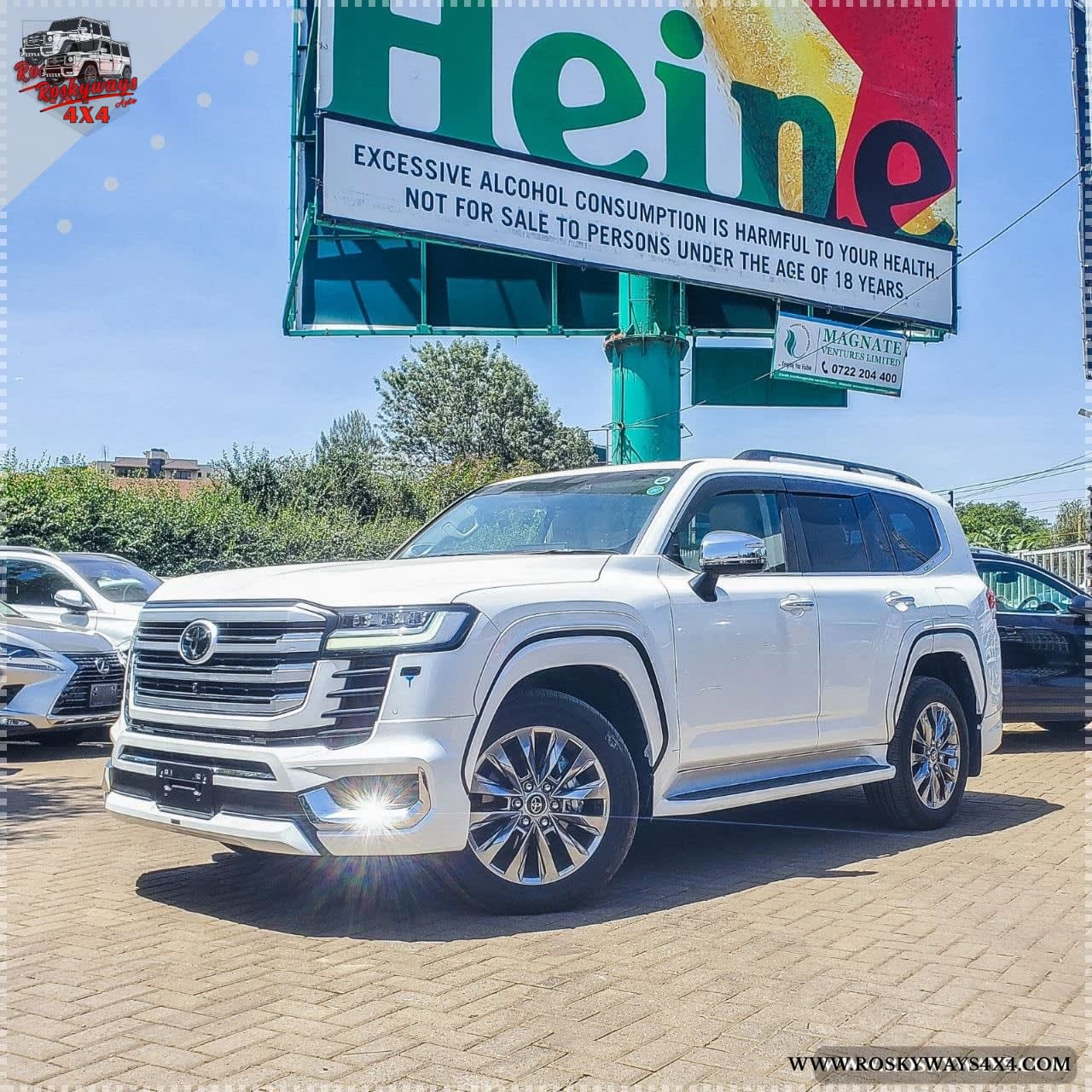
— Buyer Comparison
Toyota Land Cruiser V8 vs V6 (LC200 vs LC300): Engineering & Duty Guide Kenya
Is the new Twin-Turbo V6 tough enough for African roads, or is the legendary 4.5L V8 still king? We break down the engineering reality, the GA-F platform weight savings, and how KRA taxes the LC200 vs the LC300.
For over a decade, the Toyota Land Cruiser 200 Series (LC200) powered by the 4.5-liter 1VD-FTV V8 turbo-diesel was the undisputed king of Kenyan roads. It was heavy, thirsty, and practically indestructible. When Toyota announced that the new 300 Series (LC300) and 250 Series (LC250) would drop the V8 in favor of a 3.3L / 3.4L Twin-Turbo V6, a wave of skepticism hit the East African market. High-net-worth buyers and corporate fleet managers immediately asked: 'Can a smaller V6 survive the heat, dust, and diesel quality of upcountry Kenya?' The answer requires looking past the cylinder count to understand the massive engineering shift Toyota executed, and how this shift fundamentally changes KRA import duties.
1. The Engineering Shift: 1VD V8 vs F33A V6
Toyota did not downsize the engine to save money; they downsized it to meet global emissions standards while actually increasing performance. The physics speak for themselves:
- ◆The V8 Era (LC200 4.5L 1VD-FTV Diesel): Produced roughly 268 HP and 650 Nm of torque. Paired with a 6-speed automatic, it delivered power like a freight train—slow to spool up, but unstoppable once moving. The cast-iron block offered massive thermal mass, making it highly tolerant to overheating abuse.
- ◆The V6 Era (LC300 3.3L F33A-FTV Twin-Turbo Diesel): Produces 304 HP and a massive 700 Nm of torque. Despite losing two cylinders, it generates 36 more horsepower and 50 more Nm of torque than the V8.
- ◆Transmission & Platform: The LC300 V6 is paired with a highly responsive 10-speed Direct Shift automatic transmission. Furthermore, the new GA-F platform sheds 200 kg of chassis weight. The result is a vehicle that accelerates faster, corners flatter, and overtakes on the Nakuru-Eldoret highway with vastly less effort than the heavy LC200.
The 'Hot-V' Turbo Design
Toyota placed the twin turbos inside the 'V' of the engine block (the valley between the cylinder banks). This reduces the distance exhaust gases must travel to spin the turbos, virtually eliminating 'turbo lag.' When you press the pedal in an LC300, the response is immediate—unlike the characteristic 2-second delay of the old V8.
2. The Kenyan Operating Reality (Fuel & Durability)
The main concern in Kenya is fuel quality. Modern diesel engines use Diesel Particulate Filters (DPF) and complex exhaust gas recirculation (EGR) systems that choke on high-sulfur fuel.
Fortunately, Kenya’s transition to low-sulfur diesel (50ppm) at major stations (Shell, Total, Rubis) makes operating the F33A-FTV V6 entirely viable in Nairobi and major highways. However, if your operations require refueling from unregulated drums in remote frontier counties (Turkana, Marsabit), the older, mechanically simpler V8 (especially in 70-Series or LC200 form) remains the safer tactical choice due to its higher tolerance for dirty fuel.
3. KRA Duty & CRSP Valuation Dynamics
Engine displacement historically drove massive tax penalties in Kenya. KRA evaluates the new V6 lineup using official Current Retail Selling Price (CRSP) model codes, which reflect the premium global pricing of the new platforms:
- ◆LC200 V8 ZX (e.g., CBA-URJ202W 4.6L Petrol): KRA CRSP KES 11,959,178. Attracts the highest excise duty tiers due to the 4500cc+ displacement.
- ◆LC300 V6 ZX & GR Sport (e.g., 3BA-VJA300W 3.5L Petrol / F33A-FTV Diesel): KRA CRSP ranges from KES 13,770,032 (ZX Petrol) to KES 21,291,614 (GR Sport). While engine capacity is lower (saving marginally on displacement-based excise tiers), the massive base CRSP means import duties on the LC300 remain high.
- ◆LC250 First Edition (e.g., 3DA-GDJ250W 2.8L Diesel): KRA CRSP KES 21,390,097. The newest architecture carries peak valuation.
4. The Buying Verdict: Which Should You Direct Import?
Through Roskyways Direct Import, you secure these vehicles with a 40% initial deposit, preserving capital while the unit is in transit from Japan or the UK.
- 01Buy the LC200 V8 if: You want ultimate depreciation stability, you operate in deep off-grid locations with questionable fuel quality, and you prefer the heavy, planted feel of the traditional cast-iron V8 era.
- 02Buy the LC300 V6 / LC250 if: You demand modern executive safety, superior on-road dynamics, 10-speed fuel efficiency, and immediate overtaking power. It is a technological leap forward that rewards the buyer who maintains it properly.
Whether you are hunting a late-model 2020 LC200 V8 or a factory-fresh LC300 GR Sport, our sourcing teams run full KRA CRSP duty calculations before you commit capital. To discuss a Land Cruiser acquisition brief, call +254 768 021 133 or visit the Roskyways Command Centre on Gitanga Road, Lavington.
— Ready to explore
Talk to the Roskyways team
See our current inventory, request a specific import, or arrange a test drive at our Lavington showroom. We're here Monday to Saturday 8am–6pm and Sunday 10am–4pm.
— Frequently Asked
Quick answers
Does the LC300 V6 overheat on long upcountry runs?
+
No. The LC300 features a massive, highly efficient cooling package designed specifically for Middle Eastern and African climates. As long as the radiator is kept free of thick mud, thermal management is superior to the older V8.
How does the GR Sport differ from the ZX on the LC300?
+
The ZX is the luxury flagship, featuring 20-inch wheels, rear entertainment, and refined aerodynamics. The GR Sport is the off-road flagship, featuring electronic Kinetic Dynamic Suspension System (E-KDSS), 18-inch wheels, front/rear differential locks, and a more aggressive stance.